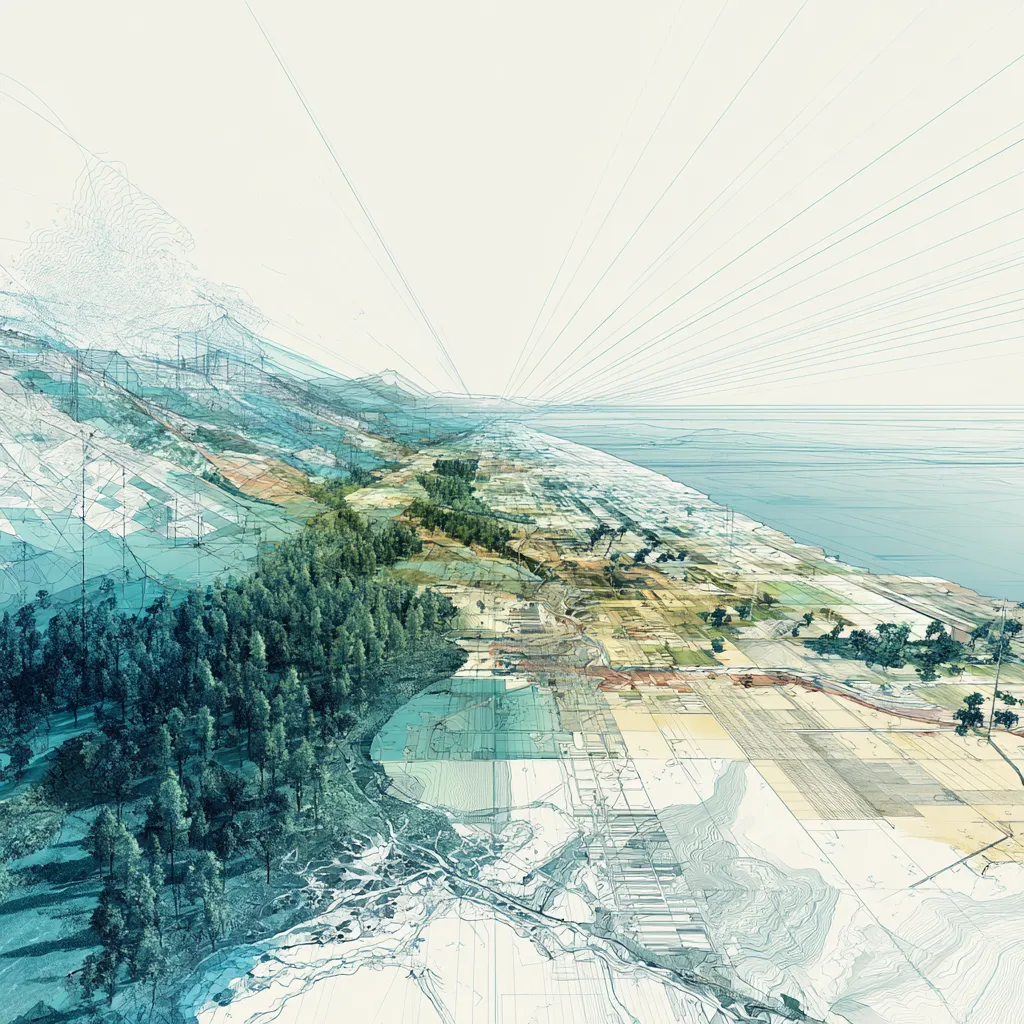
Plural Sovereignty recognizes that a continental polity contains multiple overlapping political communities: geographic, cultural, indigenous, ecological. Constitutional design accommodates this reality rather than forcing a fiction of undifferentiated unity. Plural Sovereignty is the structural recognition that the people who share a political order do not constitute a single, homogeneous community, and that governance is more legitimate and more effective when it reflects this honestly.
The Fiction of Undifferentiated Unity
“We the People” is a powerful phrase. It is also a fiction. The people who inhabit a continental polity do not form a single community with a single identity, a single set of interests, or a single relationship to the land they live on. They never have. The constitutional pretense that they do has been used, repeatedly, to suppress the political existence of communities that do not fit the dominant narrative: indigenous nations treated as obstacles rather than polities, regional cultures overridden by national uniformity, ecological communities ignored because they do not align with state boundaries.
The fiction of undifferentiated unity does not produce unity. It produces domination dressed as consensus. When a constitutional order assumes a single “people,” it necessarily privileges whichever community’s identity, interests, and ways of life are treated as the default, and it forces everyone else to either assimilate or be governed on terms they did not shape. Plural Sovereignty names this honestly and designs around it.
This does not mean the polity has no shared commitments. It means that what is shared — the Universal Human Rights floor, the structural principles of governance, the commitment to democratic self-rule — sits above and across the plurality of communities, binding them together without flattening them into one.
Types of Political Community
Plural Sovereignty recognizes that political community forms along multiple axes, not just geographic ones:
-
Geographic communities — states, cities, regions, rural areas. These are the most familiar unit of political organization, and they remain important. But geography is only one axis of legitimate political community, and not always the most salient one.
-
Cultural communities — linguistic, ethnic, religious, diasporic. People who share a language, a cultural tradition, or a history of collective experience form political communities with legitimate interests in self-governance over matters that affect their cultural life. This is not identity politics; it is a recognition that culture is one of the ways human beings organize their collective existence.
-
Indigenous nations — political communities with governance traditions, territorial relationships, and sovereignty that predate the constitutional order. Indigenous nations are not ethnic groups, not interest groups, and not historical artifacts. They are living polities. Any constitutional design that does not recognize this is built on a lie about its own origins.
-
Ecological communities — people who share a watershed, a coastline, a bioregion, or an environmental fate, and the natural systems themselves. The community downstream of the dam has a political relationship that does not respect state lines. The communities around the Great Lakes share governance interests that no single state can represent. But Plural Sovereignty extends beyond the human communities organized around ecological realities to the ecological systems themselves. Ecological Embeddedness recognizes that natural systems (rivers, forests, watersheds, ecosystems) possess intrinsic value and legal standing independent of their utility to humans. The watershed is not just a community of people who share an environmental fate; it is itself an entity with rights and standing that governance must recognize. This makes ecological communities arguably the most radical form of plural sovereignty: not just human communities with overlapping jurisdiction, but living systems with their own right to exist and flourish, requiring guardianship institutions to represent their interests. As ecological crisis intensifies, these communities, both human and non-human, become more politically salient, not less.
These categories overlap. A person belongs to several simultaneously. A member of a tribal nation living in a city within a particular bioregion participates in multiple political communities at once, each with legitimate claims on different aspects of governance. Constitutional design must accommodate this layered reality rather than forcing people to choose a single political identity.
How This Differs from Federalism
The American federal system distributes power along one axis: geographic units of different sizes. States have authority over some matters, the federal government over others, and the boundaries are contested endlessly. This is a form of pluralism, but a severely limited one.
Plural Sovereignty goes further in two ways. First, it recognizes that geographic units are not the only legitimate basis for political community. A tribal nation’s sovereignty is not derived from the state it happens to be located in. A bioregional community’s governance interests are not adequately represented by the states whose borders happen to bisect the watershed. Federalism asks only “at what geographic level should this decision be made?” Plural Sovereignty asks “which communities have a legitimate stake in this decision, and how should their authority be structured?”
Second, Plural Sovereignty allows for overlapping jurisdiction as a feature rather than a problem. The American federal system treats overlapping authority as a source of conflict to be resolved, usually by one level winning and the other losing. Plural Sovereignty treats it as a structural reality to be governed. Multiple communities can have legitimate authority over different aspects of the same question, and the constitutional architecture should provide mechanisms for negotiating that overlap rather than pretending it does not exist.
The inherited principle of federalism as experiment — Brandeis’s “laboratories of democracy” — is valuable and preserved here. Subsidiarity & Solidarity is a more rigorous version of that idea. But Plural Sovereignty extends beyond it, recognizing that the relevant “laboratories” are not only geographic.
Indigenous Sovereignty
Indigenous sovereignty is the most urgent and most clarifying case for Plural Sovereignty. The relationship between indigenous nations and the constitutional order they were forcibly incorporated into is not a policy question. It is a question of political legitimacy.
Indigenous nations governed themselves for millennia before European contact. Their sovereignty was not granted by the Constitution and cannot be legitimately revoked by it. The legal fictions through which the United States has managed this reality — the doctrine of discovery, plenary power, the trust doctrine — are instruments of domination, not frameworks of justice. A constitutional design that takes its own principles seriously must confront this directly.
Plural Sovereignty provides the structural framework for doing so. It recognizes indigenous nations as political communities with inherent sovereignty, not as subordinate units within a hierarchy they did not consent to. What that recognition requires in practice — land return, treaty fulfillment, governance autonomy, resource rights — is a matter for negotiation between sovereign communities. But the starting point is the recognition itself: these are polities, not populations.
Indigenous sovereignty also has a deep connection to Ecological Embeddedness. Many indigenous governance traditions are organized around relationships to land, water, and living systems in ways that Western political thought has only recently begun to take seriously. The recognition that natural systems have rights and standing, that the river is a relation and not a resource, is not a Western legal innovation. It is an indigenous insight that Western jurisprudence is belatedly codifying. Recognizing indigenous sovereignty is not only a matter of justice to those communities; it is a source of governance knowledge about how to live within biophysical limits, and how to recognize the standing of non-human life, that the dominant constitutional tradition badly needs.
The African American Political Community
The case of Black Americans is structurally different from indigenous sovereignty, and Plural Sovereignty must be honest about why.
Indigenous nations had their existing sovereignty overridden by colonial force. Enslaved Africans had their sovereignty violently severed — torn from the political communities in which they held membership and reconstituted as property within a system designed to deny their political existence entirely. There was no preexisting African American polity on this continent whose sovereignty could be recognized. The political community that exists was forged in and through the experience of enslavement, resistance, survival, and the long struggle for full membership in a polity that has never fully granted it.
That community is real, and it is political. The Black church, historically Black colleges and universities, mutual aid societies, the civil rights movement, and the broader tradition of Black political organizing are not merely cultural expressions. They are the institutions of a political community that built its own governance capacity precisely because the dominant order excluded it. Reconstruction was a brief, radical experiment in recognizing that political community, and its violent suppression was among the most consequential failures of American constitutional design.
Plural Sovereignty does not treat the African American experience as identical to indigenous sovereignty. The claims are different. Indigenous nations seek recognition of sovereignty that predates and exists independently of the constitutional order. The Black American political community’s claim is different: it is a demand for full and genuine inclusion in a polity whose prosperity was built on its labor and whose democratic promises have been systematically broken. It is a claim that the political community forged in resistance has standing, that its institutions and traditions of self-governance deserve structural recognition, and that the fiction of a color-blind “We the People” has been, in practice, a mechanism for continued exclusion.
Both cases expose the same structural failure: a constitutional order built on the fiction of undifferentiated unity cannot do justice to communities whose relationship to that order was never one of free consent. Plural Sovereignty insists that constitutional design confront these histories rather than bury them under abstractions.
Overlapping Membership
People belong to multiple political communities simultaneously, and increasingly so. An immigrant maintains ties to a community of origin while building a life in a new place. A member of a diaspora participates in cultural and political life that spans national borders. A scientist belongs to a disciplinary community whose governance interests — research freedom, institutional independence, shared data — cross every geographic boundary.
A constitutional order built on the assumption of singular allegiance forces people to deny part of their political reality. It demands that immigrants assimilate into a single national identity rather than participating in multiple communities simultaneously. It treats dual loyalties as suspicious rather than normal.
Plural Sovereignty accommodates overlapping membership as a structural feature. The question is not “which community do you belong to?” but “what governance authority does each of your communities legitimately hold, and how do those authorities interact?” This is more complex than singular sovereignty. It is also more honest, and more adequate to the way people actually live.
Relationship to Other Principles
Plural Sovereignty operates in close relationship with several other principles, and the interactions between them are where much of the framework’s real work gets done.
Subsidiarity & Solidarity distributes authority vertically, from local to central, with a presumption toward the most local competent level. Plural Sovereignty distributes it laterally, across different kinds of political community. Together they create a multi-dimensional allocation of authority: decisions are made at the right level and by the right communities, not just by geographic units arranged in a hierarchy.
The solidarity dimension is especially important here. A framework that recognizes multiple political communities but provides no mechanism for mutual obligation between them is a recipe for fragmentation. Subsidiarity’s insistence that the larger community has a structural obligation to respond when any part faces crisis beyond its capacity is what holds Plural Sovereignty together. The plurality is real; so is the solidarity. Indigenous nations, ecological communities, cultural communities, and geographic communities each have legitimate authority, and each has a claim on the others when crisis strikes. Plural Sovereignty without solidarity is balkanization. Solidarity without plural sovereignty is assimilation. The framework requires both.
Ecological Embeddedness is not just a related principle; it is one of the strongest arguments for Plural Sovereignty in the first place. Biophysical systems do not organize themselves along state lines. A watershed is a political community whether the law recognizes it or not — the people within it share an environmental fate, and governance decisions upstream affect everyone downstream. The same is true of airsheds, aquifers, coastlines, and fire-prone landscapes. Ecological Embeddedness demands that governance operate within biophysical limits and that natural systems possess rights of their own — the right to exist, flourish, and regenerate. Plural Sovereignty provides the constitutional architecture for recognizing both the human communities that biophysical realities create and the natural systems themselves as entities with standing. Ecological systems are a form of overlapping sovereignty: the river does not respect municipal boundaries, the forest does not care about state lines, and the migratory corridor crosses every jurisdiction it passes through. Without Plural Sovereignty, Ecological Embeddedness and the rights of nature it establishes have no institutional home.
Temporal Pluralism adds another dimension: different institutions operating at different speeds. A cultural community’s governance of its own traditions operates on a different timescale than a bioregional community’s governance of a shared watershed, and both operate on a different timescale than electoral democracy. The constitutional architecture must accommodate this temporal diversity alongside the spatial and communal diversity that Plural Sovereignty addresses.
Cooperative Sovereignty extends the same logic externally. If the polity’s internal design recognizes multiple overlapping communities, its external relationships with other polities should be governed by the same principles: mutual respect, non-domination, and the recognition that some governance questions appropriately reside at supranational levels. Plural Sovereignty and Cooperative Sovereignty are the internal and external faces of the same commitment: sovereignty is real, legitimate, and plural.